
Introduction to the LCIS Teams and their research
The research activities conducted at LCIS are primarily focused on embedded and communicating systems. The themes addressed include specification, modeling, design, communication, safety, security, and diagnostics of these systems. Within these various themes, the laboratory proposes new methods and models and develops tools that impact industrial applications.
The laboratory consists of more than 60 researchers: 26 teacher-researchers from Grenoble INP - Esisar, Engineering school in Advanced Systems and Networks of Université Grenoble Alpes and the IUT of Valence, 20 to 30 doctoral students, post-doctoral researchers, and research collaborators. The research conducted is associated with two research clusters at Université of Grenoble Alpes: the MSTIC cluster (Mathematics, Information and Communication Sciences and Technologies) and the PEM cluster (Physics, Engineering, and Materials).




Our laboratory's 3 research teams
ORSYS
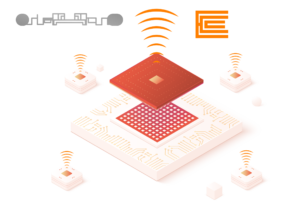
The research developed within the ORSYS team focuses on the use of radiofrequency (RF) technologies and signals, wireless communication, signal processing, and measurement.
ORSYS is particularly interested in passive information transmission systems based on the principles of backscattering and back-modulation of electromagnetic waves. Among the systems studied are wireless/contactless systems such as RFID technologies and Ultra-Wideband (UWB).
CTSYS
The CTSYS team consists of researchers from various disciplines (electronics, computer science, telecommunications) who study the different elements of embedded systems: from the hardware to the applications, with particular attention to the interaction between hardware and software.
The main application areas of the team’s research are: the Internet of Things (including RFID systems), sensor networks, Smart-* environments (Home, Building, Car, etc.), and the transportation industry.
CO4SYS
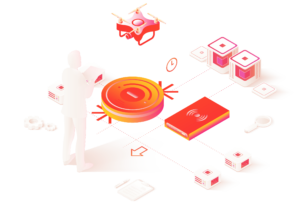
The CO4SYS team works on the modeling, control, and supervision of artificial complex systems.
The team is interested in physically distributed multi-agent systems, where agents with reactive and cognitive capabilities coexist, needing to find compromises between potentially incompatible local and global objectives. These agents reason with partial knowledge of the overall system and must ensure dynamic and insecure routing of communication. This paradigm allows the integration of complementary approaches from collective artificial intelligence and control theory.
Multidisciplinary and International research
Our researchers regularly publish their work in international conferences.
3
Teams
60
Experienced Researchers
50
Partners and Collaborations
20
Scientific Publications per Year